
Investing In Start-Ups Driving Education And Economic Opportunity

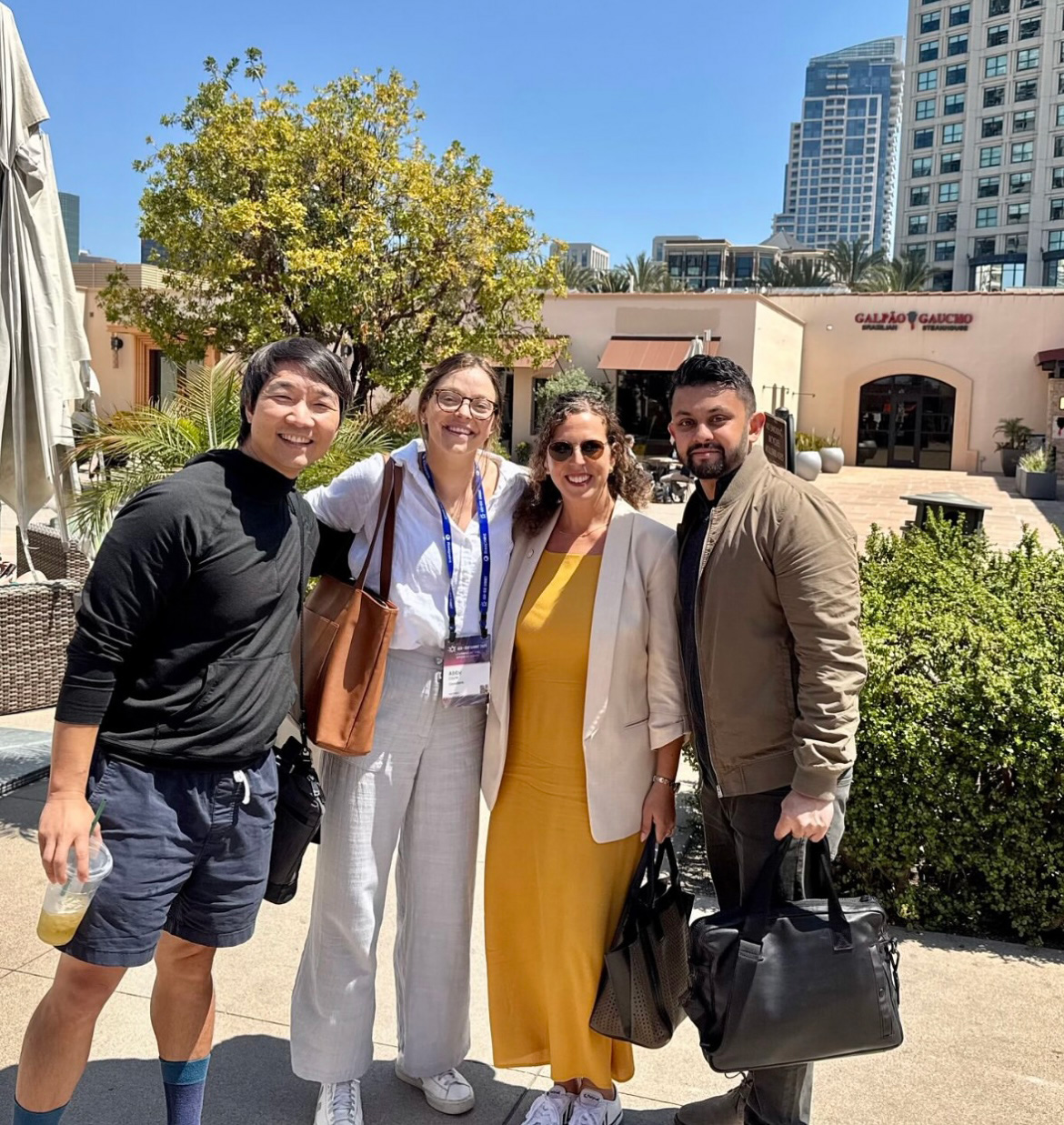
Miriam Altman-Reyes is the Founder, CEO, and General Partner of Brass Ring Ventures, anexited-operator-led fund investing in tech founders advancing economic mobility. She is also a ManagingDirector at StartEd, a coach with the Transcend Network, and an advisor to private equity and investorgroups in education and workforce innovation.Previously, Miriam was Co-founder and CEO of Kinvolved, an efficacy-tested attendance platform acquiredby PowerSchool in 2022. At PowerSchool, she served as Vice President of Go-to-Market Strategy andPartnerships, leading cross-functional efforts to launch K–12 and workforce solutions.A former NYC public school teacher via Teach For America, Miriam has also been an NYU AdjunctProfessor and fellow with Education Pioneers and Columbia University. Her work has been featured in TheNew York Times, Forbes 30 Under 30, and Crain's. She holds degrees from Brown, Lehman College, andNYU Wagner, and serves on the boards of The Women's Fund Miami-Dade and The Brown Club of GreaterMiami.
Miriam discusses empowering underrepresented tech founders to scaleimpact-driven innovations, and key lessons from start-up leadership to help youunlock economic mobility and achieve both financial sustainability and measurableimpact.
Q: To start off, can you please share a bit about your background and what led you to workingin education and workforce innovation?
“I had an amazing, hands-on board of investors who werefounder-friendly and truly wanted to support me to be successfuland ultimately lead my company to a positive acquisition. I wantedto replicate that experience for other founders by bringing our teamback together to do it again.”
I started my career in New York City back in 2008. Fresh out of college, I participated in a programcalled Teach for America, which places recent college graduates (and others now) into classrooms thatserve overlooked and underrepresented communities across the U.S. I taught at a New York Citypublic high school for several years, where I had the opportunity to gain a firsthand look into some ofthe challenges facing our K-12 education system.The issue that stood out to me most, because it was so foundational, was student absenteeism. Iinterrogated that challenge from the front lines as an educator and found that it was a twofold issue.Firstly, the data was difficult to access for the stakeholders who needed it to make informedinterventions and ensure students were attending school. Secondly, stakeholders like parents,administrators, guardians, students themselves, and educators lacked the proper functionality andtechnology to collaborate and communicate effectively.
I left the classroom having identified a deep problem that I hadn't yet solved, and as a student at NYUWagner studying public policy, I launched my first company, Kinvolved, to address the chronicabsenteeism crisis.This issue is persistent and pervasive across the United States and it's the number one indicator ofwhether a student will graduate from or drop out of high school, which has much broader economicimplications across communities and the country.At Kinvolved, I served as CEO and co-founder. Over about eight and a half years, we built a technologyplatform to address these challenges. Ultimately, the company was acquired by PowerSchool, which atthe time was the largest publicly traded K-12 SaaS company in North America.
I spent around a year and a half at PowerSchool, mostly focused on better understanding the broadereducation market after having spent so many years focused on a specific problem and solution.I then leveraged my experience as an educator, entrepreneur, and corporate product leader to launchmy second venture, Brass Ring Ventures. I've been fortunate to bring back together several membersof my former Kinvolved team—many of whom have now been through more than one successful exit.While I've experienced the Kinvolved exit, collectively we've been through six in this space.During my time at PowerSchool, I spoke with many founders and realised what set me apart was notreadily available to many others, particularly underrepresented founders, including women and peopleof colour.
Q: As the founder of Brass Ring Ventures, can you share more about this organisation and howit's supporting tech founders to drive economic mobility?
“Our goal is to drive more capital into businesses that are bothstrong impact opportunities and have the potential for successfulexits, where we can return capital to our limited partners. This is atrue win-win.”
I started Brass Ring Ventures with the operator model in mind. A lot of my success at Kinvolved camefrom having board members and advisors who had personally been through acquisitions and exits.They knew how to provide valuable tactical and strategic advice to me and my team.They helped us remain focused on impact while also achieving our end game, which was theacquisition by PowerSchool. I realised many founders, especially underrepresented ones, didn't haveaccess to this kind of support. I wanted to replicate this.We began by building what we call our growth studio, which is the vehicle we use to support founders,mostly from seed stage to Series A. Our model centres on a framework we refer to as advise, educate,and execute.
I have a general partner in the fund who is also our operating partner, focused on financeand operations. We also have team members covering sales, marketing, branding, technology andproduct development, and U.S. market entry, especially for companies looking to expand into the U.S.We take a very hands-on approach, leveraging the experience my team and I have gained through notjust the Kinvolved exit but also several other acquisitions. We bring that collective expertise to founderswho are in the early stages of building their businesses.
I initially funded the growth studio with my owncapital, as I believed this model filled a critical gap in what many other investors and funds offer.About six months ago, we began fundraising for our first official fund. Prior to that, we had made someinvestments through partner capital, which went well, and we wanted to expand our ability to investmore.So far, the fundraise is going well, and we'll start making investments from that fund later this year. Weinvest in companies generally led by at least one underrepresented founder, and about 92% of ourcurrent portfolio of 25 companies fits this demographic. These companies are primarily seed stage, andour focus is helping them cross the chasm to Series A, profitability, or acquisition.We provide this hands-on support in four intersecting sectors: education, future of work, health, andfinancial innovation and inclusion. We see these areas as key drivers of the economic mobility andopportunity we aim to support through our work.
Q: How do you identify and evaluate the solutions you support to ensure they can createlong-term impact outcomes?
“When it comes to evaluating companies, we look at a range ofcriteria. For earlier stage companies, one of the most critical thingsis founder-market fit. We want to back founders who have a deeppersonal connection to the problem they are solving. Thisconnection usually leads to a deeper understanding of the issueand increases the likelihood that the solution will truly meet marketneeds.”
In terms of how we identify companies, a lot of it is relationship-based. We receive referrals fromco-investors, founders we already know, and others within our network. Because we maintain such ahands-on relationship with entrepreneurs, both myself and my partners have built extensive networksin this space, which naturally leads to a steady flow of introductions.That being said, we don't want to rely solely on our networks. In the spirit of creating opportunity foreveryone, particularly those who may be approaching entrepreneurship from less traditional pathways,we've made it easy for founders to apply and get on our radar through an inbound application processon our website.We respond to everyone who applies. We also actively engage through social media, have receivedsome media coverage, and speak at many conferences, which all help us connect with new founders.Given the collaborative nature of our model, we also look for founders who are coachable and open toguidance and feedback. They don't need to take all of our advice, but we hope some of it resonateswith them and adds value.We're also looking for evidence of product-market fit.
Although we work with early-stage companies,we typically don't work with pre-revenue start-ups.We prefer to see companies that have been in market for a few years, have customer traction, andhave gone through at least one customer retention cycle. This helps us see whether customers are notjust trying their product but continuing to use it and deriving real value.We assess the overall market opportunity too, both in terms of the potential for impact and the financialviability of the product or solution. We really see these two aspects as interlinked.Lastly, we look at both market traction and what we call 'traction from the field.' Some of our companiescome to us with previous fundraising experience, while others do not, but that combination of tractionand promise is key to our evaluation process.
Q: When it comes to the purpose-driven tech ecosystem, what key challenges or opportunitiesare you seeing, and how is Brass Ring Ventures addressing these?
“There are many challenges and opportunities in buildingpurpose-driven businesses, but from a more systemic perspective,there are a couple that stand out. One major challenge we've seenthat we are actively working to solve is that many founders havedeveloped strong solutions to address important societalproblems, but without access to capital, networks, and theinfrastructure needed to scale, those ideas often remain justthat—ideas.”
It's about really doing the work behind the scenes and not just talking about supporting thesecompanies, but actually walking the walk to help them scale. This is where our operator-led model isparticularly effective.From personal experience, I know that having robust impact metrics is not just beneficial for thecommunities these businesses serve; it's also good for business. When companies can demonstratemeasurable impact, it drives business growth, influences buyer decision-making, and ultimatelystrengthens the company's value proposition.Helping our companies implement strong impact frameworks is a key part of the challenge we aresolving.
Q: How are you seeing the space of impact investing evolve, and what role can it play inaddressing systemic issues like economic and social equity?
“Impact reporting is no longer a nice-to-have, it's now arequirement that drives buyer decision-making across the sectorswe're investing in. It's critical founders understand how to measuretheir impact, report on it effectively, and hold themselvesaccountable. This isn't just about values, it's a best practice fordriving sustainable business outcomes.”
I think as more products enter the market and certain areas become more saturated, there's growingurgency around finding solutions that truly work. Limited partners and consumers alike are demandingfar more proof of outcomes and impact.Beyond that, I believe the role of investors is evolving. Traditionally, investors have largely been viewedas capital allocators. But our model, which is operator-led, represents what I hope is the beginning of abroader shift in the impact investing space.We're seeing more investors who have also been operators, people who've built companies, led teams,and navigated exits. Bringing that experience and operational perspective to the table offers real,hands-on value to founders.The stakes are higher now. The economic landscape has changed significantly compared to a fewyears ago, and founders need more support to drive results and deliver meaningful impact. We see ourrole not just as capital providers but as active partners in helping founders succeed.
Q: What advice would you offer to an emerging entrepreneur looking to raise capital for animpact-led venture?
“Start building your community and network as early as possible.While we'd love for the process of building relationships withinvestors, strategic partners, and buyers to be fully democratic, thereality is it's still very relationship-driven. Building relationshipsearly is absolutely critical for success as an early-stage founder.”
I'd say three things. First, be extremely clear on your values and 'why.' As an impact-drivenentrepreneur, you have the unique opportunity not just to build something that makes money, but tocreate a business that also delivers meaningful social value. What gets you up every day? Why are youdoing what you're doing? Let that sense of purpose guide your venture and become a core part of yourbrand.Lastly, think about growing in alignment with your capacity. It's important to have ambitious goals andto build businesses with the potential to drive major impact and high growth, but traditional venturecapital expectations don't always align with the industries we invest in.That's why it's so important to seek out not just patient capital, but intentional capital. This is capital thatunderstands your mission and is aligned with the outcomes you want to achieve.
Q: What inspiring projects or initiatives have you come across recently creating a positivechange?
We currently support about 25 companies in our portfolio, and while I'm excited about all of them, thereare a few that stand out and are worth highlighting.One is a company called Miss Berni, which is launching a new platform called Edbinder. They'readdressing a two-part issue that sits at the intersection of education, workforce, and financial inclusion.The platform is designed to help solve the U.S. teacher acquisition and retention crisis by betterconnecting U.S.-based educators with the right professional opportunities. At the same time, it providesaccess to opportunities for highly qualified, bilingual teachers in other countries, starting in Chile, where the team is based. They're operating between Chile and the United States, and we're really excitedabout the potential impact of what they're building.Another standout is OKO, a company based in New York and led by founder Matt Miller, who has spenta couple of decades working in the education sector. He's developed a platform to enhancecollaboration in classroom settings, with the longer-term aim of adapting that same technology toworkplace environments and other collaborative contexts. It's a shift away from simply introducing moretech into schools and workplaces—it's about ensuring the technology actually fosters meaningfulcollaboration.
Finally, Unruly Studios, based in Boston, has created a combined hardware and software platformdesigned to teach students coding and enhance their maths skills through a kinesthetic learning toolthey call Splat. What's exciting is that it's being used not just during the traditional school day, but alsoin out-of-school time settings, making it a highly versatile and inclusive educational tool. It's beenfascinating to support them and watch their growth.
Q: To finish off, what books or resources would you recommend to our audience?
One of the books I always recommend is Crossing the Chasm by Geoffrey Moore. It's especiallyrelevant for entrepreneurs trying to move from early-stage validation to more scalable growth—it's alsowhere we get the language we use at Brass Ring Ventures to describe that journey.Another book I'd recommend, particularly for those interested in the impact investing space, is A NewCapitalism, written by my dad, Frank Altman. He's had a long and meaningful career in this sector, so Ihave to give him a little shout out. There's also a related podcast, which I think offers valuable insights.
Speaking of podcasts, I'm a big fan of How I Built This by Guy Raz. It tells a wide variety of storiesabout entrepreneurs, and I find it really inspiring. I also regularly listen to The Interview and The Dailyby The New York Times, which go deeper into different perspectives and provide helpful context oncurrent events. I think this is important for anyone trying to understand how broader systems impactmarkets and communities.
Finally, I'd like to mention that we're launching a community through Brass Ring Ventures later thissummer. It will offer entrepreneurs the opportunity to connect with each other, engage with our team,and access exclusive resources and perks that we typically provide to our portfolio companies. It's aresource I'm excited about and one I hope will be valuable to many.